S3AFER software platform
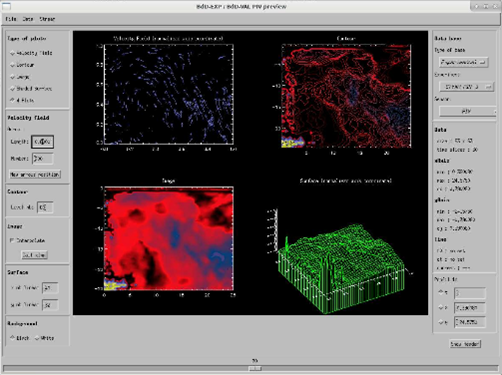
S3AFER (Scientific Simulation Software for Assessment of Fire and Explosion Risk) is a software platform developed by ASNR, specifically by the Fire and Explosion Laboratory (LIE) located in Cadarache.
S3AFER brings together a set of scientific software programs designed for modelling and simulating fires, explosions and contaminant dispersionin complex environments, particularly confined and ventilated environments typical of nuclear facilities. These tools are used to assess the risks associated with fires and explosions, in support of expertise and research.
The software platform includes several software and libraries, including:
- SYLVIA: software for simulating fires, ventilation and air contamination. It uses a zone-based approach to model rooms and ventilation networks.
- CALIF3S: CFD (Computational Fluid Dynamics) tool for detailed 3D simulations, with specific modules for fire and explosion
- ANTARES: library for signal processing, used to analyse experimental data
- PELICANS and PelGUIs: libraries for developing solvers, meshers and graphical interfaces
- GDEXP: experimental data management tool for archiving and processing data and for intercomparisons across multiple tests
- SE-Toolbox: toolbox dedicated to the development of expert systems.
- SYLIS: tool that enables coupling between the CALIF3S software and the SYLVIA software in order to use the complementarity of these two software programs to simulate the progression of a fire in a mechanically ventilated facility.
SYLVIA
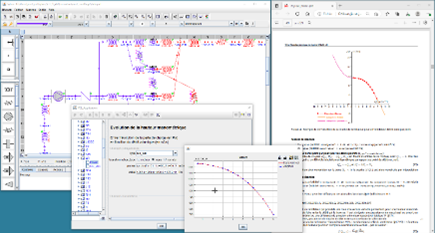
SYLVIA (Software System for the Study of Fire Ventilation and Air Contamination) is a zone-based calculation code that simulates fire or explosion situations in the premises of a nuclear facility and their impact on the ventilation system.
It enables:
-
simulate the development of fire sources
-
simulate the transport of hot gases and soot
-
simulate the suspension and transport of aerosols
-
simulate filter clogging and possible damage to fire compartmentation equipment such as doors or fire dampers.
-
The Sylvia software simultaneously processes all the different phenomena involved (fire, ventilation, air contamination).
It is the ASNR's benchmark calculation tool for studying fire and explosion risks in nuclear facilities. It is also used by the Containment and Aerodispersion Department (SCA) to address the issue of air contamination in ventilation systems. It is used to perform sizing calculations prior to experimental testing, to produce results databases for the development of expert systems (decision support tools) and to carry out studies in support of safety case assessments.
Outside ASNR, SYLVIA is used by various manufacturers, mainly to model the ventilation networks of nuclear and non-nuclear facilities in order to simulate their operation during the design and operational phases, to prepare for intervention or even their decommissioning.
Fire modelling in SYLVIA is a zone-based approach: the volume of each room is divided into two zones of variable height in which the thermodynamic properties (pressure, temperature and concentration of gaseous and particulate species) are uniform, with the upper zone containing hot gases and smoke.
The ventilation network is modelled by a set of elements, ducts, filters, dampers, fans, control devices, etc. Mass and heat exchange correlations (between zones, flames and walls) complete the mass and energy balance equations for the zones. The rates of aerosol suspension and deposition on the walls of rooms and in the ventilation network are also estimated by correlations.
A human-machine interface (HMI) facilitates data entry by the user, checks its consistency and relevance, and provides a graphical post-processing tool for the calculation results.
-
Ongoing efforts are devoted to validating the system, based on numerous full-scale tests conducted by ASNR, particularly on the GALAXIE experimental platform, as well as numerous tests published in scientific literature.
SYLVIA is based on simplified models to reduce calculation time, but these models are sufficiently robust to ensure the reliability of safety-related studies.
The SYLVIA system is implemented using the Pelicans software tool library developed at ASNR and available under a free licence.
The Sylvia software is portable on Linux (64-bit) and Windows 10 (64-bit).
Actions currently under development:
- Improvement of the filter clogging model
- Improvement of the unburned gas production model
- Development of a water mist sprinkler model.
Improvements to combustion models for homogeneous or complex solid fuel sources (glove boxes, electrical cabinets, electrical cable trays, waste drums, etc.) are the subject of ongoing efforts.
CALIF3S
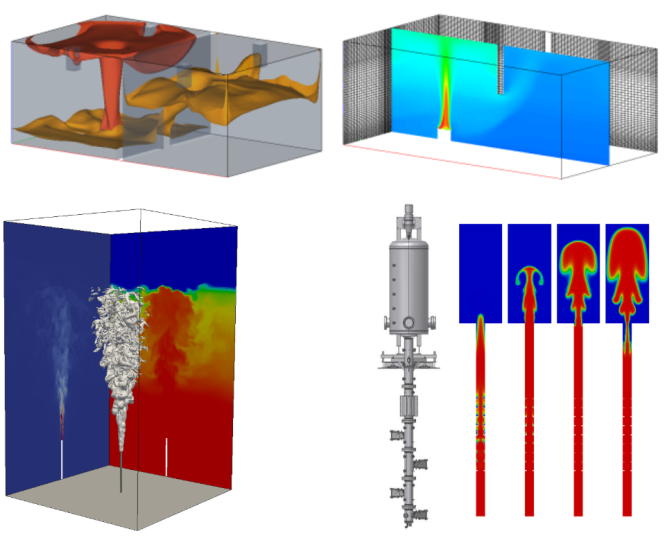
CALIF3S (Code for the Analysis of Fires and Explosions using Scientific 3D Fluid Dynamics Integration Software) is CFD (Computational Fluid Dynamics) simulation software for fires, explosions and dispersion (of pollutants or flammable gases/particles).
It can be used to study reactive turbulent flows (e.g. fire, explosion), pollutant dispersion, generic flows (stratification, plume, jet), natural convection flow (detailed temperature fields in premises, heat flux on targets, concentration fields), the deposition and detailed distribution of aerosols, and sprinkling (fire mitigation, cooling, depressurisation).
-
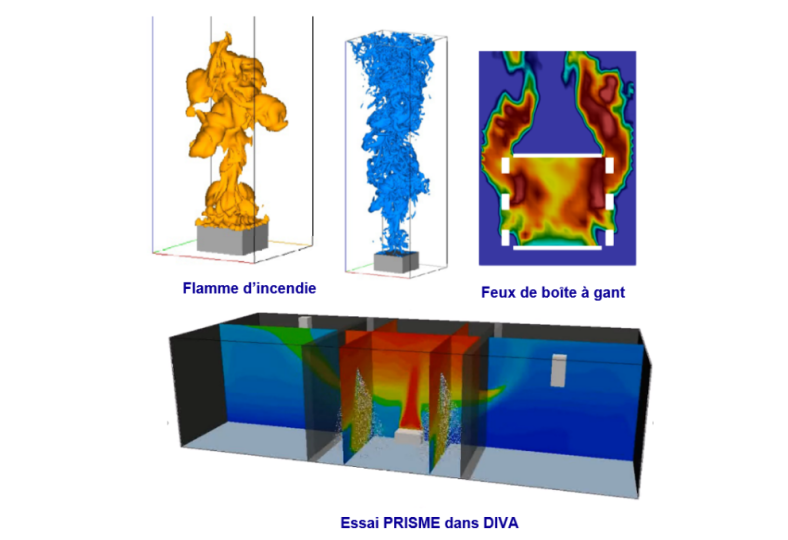
The CALIF3S fire application takes into account several models of combustion (diffusion flame), solid angle radiation, soot production and transport, thermal conduction in walls (1D/3D) and pyrolysis. It allows coupling with the compartment's airflow.
-
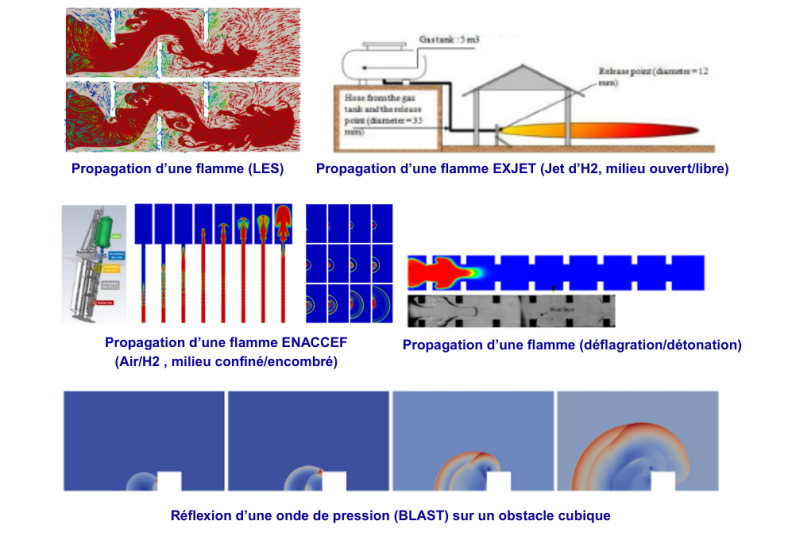
The explosion application considers compressible or incompressible flows, dispersion (formation of the explosive atmosphere) and pressure wave propagation. These simulations are based on combustion models (pre-mixing), standard RANS models for studies (k-e, k-w, ν2-f), LES deflagration models for understanding phenomena, and flame propagation models (G-equation + flame velocity).
The CALIF3S explosion application is dedicated to detailed studies and understanding of phenomena for gas and dust explosions.
The CALIF3S software is open-source and distributed under the CeCILL-C licence (an adaptation of the LGPL licence to French law). It can be reused in software distributed under any licence.
Expert systems
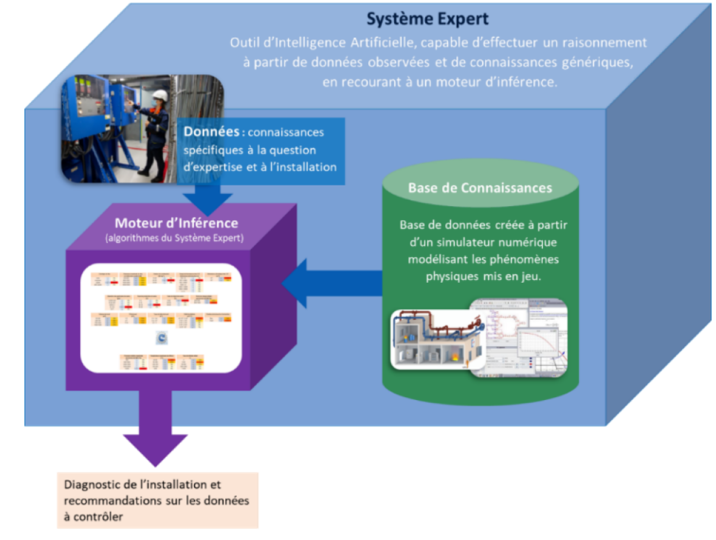
Expert systems (ES) are AI tools that enable the behaviour of a facility to be understood by establishing relationships between its various properties on the basis of a large number of simulations. They enable the most probable diagnosis or prognosis of an accident scenario in a facility to be established. Information is propagated in a negligible amount of time using an inference engine based on Bayesian networks. They are therefore decision support tools.
The learning database can be established by simulations whose input parameters are randomly sampled using a Monte Carlo method, following a distribution law defined by the user. Currently, the SYLVIA tool has been chosen for the creation of the learning database due to its low computational cost.
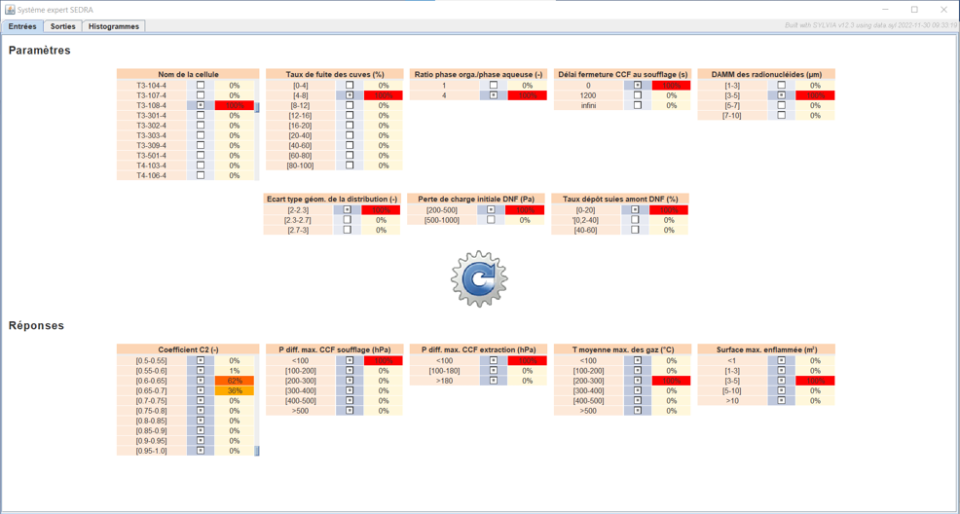
The expert system allows inferences to be made in three different modes:
- prognosis: it determines the possible responses for a given configuration of input data
- diagnostic: this mode identifies the compatible input data for a given set of responses
- mixed: it allows inferences to be made that combine the two previous modes
SE-toolbox
This is a comprehensive toolbox for preparing, generating and post-processing a database, then developing an Expert System to represent it. It can be coupled with any calculation code.
GDEXP
The GDEXP tool is designed to collate and organise data produced during experimental tests. It is used for tests conducted at the Fire Testing Laboratory. This data is stored in three databases according to its level of processing: the experimental database (BdD-EXP) for raw data, the validated database (BdD-VAL) for consolidated data and derived quantities, and the external database (BdD-EXT) for additional data produced outside the LEF. This system ensures consistent and sustainable management, facilitates access to information and ensures the traceability of processing.
SYLIS
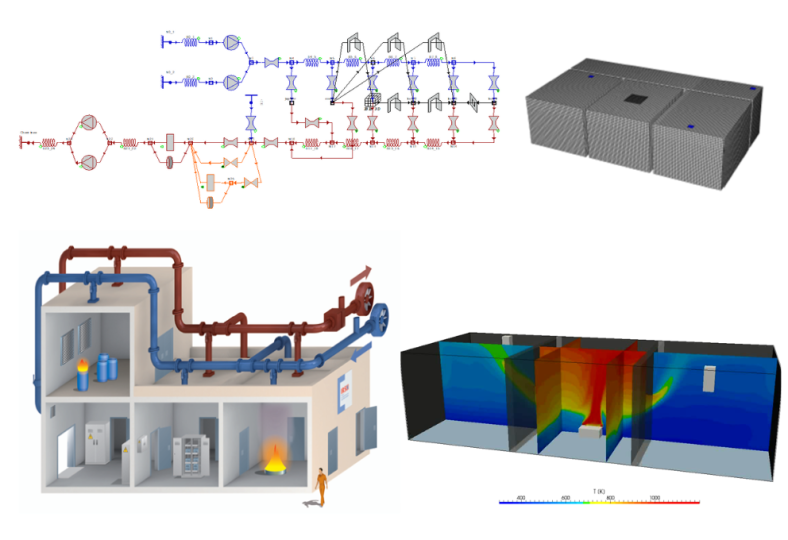
The objective of a coupled resolution between the CALIF3S [2] software (CFD code) and the SYLVIA [3] software (zone code) is to use the complementarity of these two software programs to simulate the progression of a fire in a mechanically ventilated facility. The CALIF3S software provides a precise but costly description of the fire zone, while the less expensive SYLVIA software provides the information needed to take into account the interactions between the fire zone and the rest of the facility through the ventilation network. This coupled software is called SYLIS.
SYLIS therefore allows SYLVIA software users, via the link to CALIF3S software, to improve the accuracy of the parameters calculated when simulating a fire in a room connected to a complex ventilation network. SYLIS also allows users of the CALIF3S software, via coupling with the SYLVIA software, to take into account the effects of the ventilation network and its control on the simulated fire, and to estimate the dispersion of airborne contaminants throughout the ventilation network up to the exhaust outlets.
PELICANS
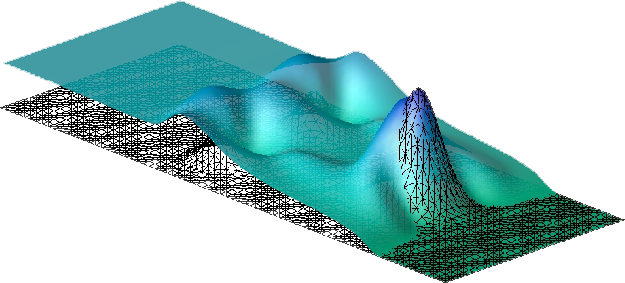
PELICANS is a library that facilitates the development of calculation software for solving partial differential equations (PDEs). Once the numerical method has been defined, PELICANS provides the tools to implement it quickly: mesh generation, matrix assembly, low-level inversion. These operations are then called by software, such as CALIF3S, to process different types of PDEs. It serves as the basis for simulation tools in various fields of transfer physics, such as the calculation of reactive multi-species flows or the mechanical behaviour of a fractured medium under stress.
PELICANS provides the functionality to manage discretisations on structured or unstructured meshes, , using finite element and finite volume methods. It handles the following situations: moving boundaries, dynamically deformable meshes, potentially non-conforming multi-domains, characteristic methods and multi-level adaptive mesh refinement.
In addition, PELICANS enables the development of parallel applications and consistent coupling with external numerical libraries (pre- and post-processing, solvers for linear algebra, etc.).
PELICANS is open-source and distributed under the CeCILL-C licence (an adaptation of the LGPL licence to French law). It can be reused in software distributed under any licence.
Specific software
The platform brings together several other specific softwares, including ANTARES, SURVIR and TEAL.
-
-
SurVir is a safety assessment tool/software for estimating the "virtual surfaces" of certain targets of interest, enabling the risk of attack by aircraft crash to be assessed.
-
Teal is a security assessment tool/software for identifying sections of traffic routes that pose a risk to a facility, particularly in the event of an accident involving the transport of polluting materials.
About the platform
The S3AFER platform has hosted numerous research projects carried out by various laboratories as part of national and international programmes.
The research laboratories and internal expertise offices involved include:
- Fire and Explosion Laboratory (LIE)French
- Fire Experimentation Laboratory (LEF) French
- Laboratory for Aerodispersion and Containment Experimentation and Modelling (LEMAC) French
- Aerosol Physics and Metrology Laboratory (LPMA) French
- Corium Physics Laboratory (LEPC) French
- Laboratory for Experimental Research and Expertise on Radionuclide Transfer in the Atmosphere (LERTA)
- Transport Safety Expertise Office (BEST)
The platform provides software support for numerous research projects, such as the PRISME and FAIR projects carried out under the auspices of the Nuclear Energy Agency of the OECD (Organisation for Economic Co-operation and Development). Experimental tests as part of the international PRISME (Propagation of a fire for elementary multi-local scenarios) programmes were carried out within the GALAXIE platform from 2006 to 2022. Another programme, called FAIR (Fire risk Assessment through Innovative Research), was launched in June 2023 for a period of five years.
Useful information
-
-
Location
Cadarache, BP 3 13115 Saint-Paul-Lez-Durance Cedex
-
Related research topics