
The 5th test in the international CABRI (CIP) program is successful
Introduction
Led by IRSN, the international CABRI (CIP) program, under the supervision of the OECD Nuclear Energy Agency, studies the behavior of nuclear fuel rods in pressurized water reactors during an accidental power excursion transient.
Led by IRSN, the international CABRI (CIP) program, under the supervision of the OECD Nuclear Energy Agency, studies the behavior of nuclear fuel rods in pressurized water reactors during an accidental power excursion transient.
This test, carried out by IRSN and CEA teams on April 24, 2023, and named CIP3-3, was the fifth test in the CIP program conducted in the CABRI facility, and the third in a "water loop" configuration, representative of the thermal-hydraulic conditions of a pressurized water reactor (PWR). The fuel rod consisted of UO2 fuel and an Optimized ZIRLO cladding: a first for the CABRI facility. The simulation was carried out using a neutron pulse lasting around ten milliseconds and with a power of 13 GigaWatt.
The purpose was to study the behavior of this type of cladding, and to investigate the reaching of the boiling crisis, in an accident situation such as reactivity injection.
The rod will now be analyzed by IRSN at a dedicated station (IRIS) in the CABRI reactor hall, before being transferred at the end of the year to CEA's active fuel examination laboratory (LECA), where it will first undergo non-destructive and then destructive analysis. This, combined with the on-line measurements acquired during the pulse, will enable the most complete possible interpretation of the test.
Thème
IRSN hosted a European meeting in Brussels to prepare for the Euratom 2023-2025 call for projects at the Maison Irène et Frédéric Joliot-Curie
Introduction
The Sustainable Nuclear Energy Technology Platform (SNETP) association, of which IRSN is a member, organized a "Coordinators Hub Day" seminar bringing together coordinators of projects involved in EU-funded consortia under EURATOM and Commission representatives.
The Sustainable Nuclear Energy Technology Platform (SNETP) association, of which IRSN is a member, organized a "Coordinators Hub Day" seminar bringing together coordinators of projects involved in EU-funded consortia under EURATOM and Commission representatives. Indeed, SNETP works in favour of innovation in the nuclear field and in particular in safety, and one of its missions is to be a facilitator in the development of actions, and to be a real catalyst of the European ecosystem in its field.
The event was held on March 14, 2023 at the Maison Irène et Frédéric Joliot-Curie (MIFJC) in Brussels, of which IRSN is a member. The MIFJC helps strengthen the presence and participation of French science in the European Commission, the European Parliament, and operators active in the political, economic and social sphere in Brussels.
This day of exchanges was the occasion for the coordinators to confront their expectations to the reality and to bring solutions to overcome the difficulties encountered (in terms of management, administration). They were also able to have privileged exchanges with the project leaders of the European Commission concerned, in order to understand the practical needs of the research community and to develop common solutions.
SNETP also presented potential solutions that could help all types of projects and promote synergies with all relevant tools in the fields of training (the ENEN association participated in the event), communication and the efficient use of National Contact Points (NCPs) in particular.
Thème
Ionising radiation and fight against cancer: the contribution of research
Introduction
On the eve of the World Cancer Day, IRSN organised in partnership with CEA, Inserm and CNRS, a conference dedicated to the contribution of research on the use of ionising radiation to the fight against cancer.
On the eve of the World Cancer Day, IRSN organised in partnership with CEA, Inserm and CNRS [1], a conference dedicated to the contribution of research on the use of ionising radiation to the fight against cancer.
This venue organised under the auspices of Marie-France Bellin and Jean-Christophe Niel, respectively chair of the board and director general at IRSN, took place at Maison Irène et Frédéric Joliot Curie, the Brussels base of several major French research institutions. Structured around three headlines – French strategy and roadmap, state-of-the-art research, and European and international actions – the presentations and debates among scientists, academics and representatives from government and international organisations highlighted the challenges, progress made, and future prospects of scientific research in medical applications such as imaging, nuclear medicine or radiotherapy where radiation technologies are used for diagnosis and/or therapy.
Acknowledging improvements achieved in cancer diagnosis and treatment
In France, like in many European countries, the use of ionising radiation in cancer diagnosis and treatment keeps growing with over 55% of patients being treated by radiotherapy. This constant increase raises many questions – e.g. on the benefit/risk balance of innovative radiation technologies (new radiopharmaceuticals, Proton-therapy or Flash-therapy), the development of combined treatment to cure radioresistant tumours or the adverse effects and the patient quality of life. These questions require in turn further research aimed at developing ever more efficient and less affecting therapeutic strategies. In this regard, the participants in the conference acknowledged the progress made over the past years in terms of improved benefit/risk balance, increased life expectancy and higher quality of life through reduced side effects, just to name a few.
Shaping the future of treatments
The presentations and debates were an opportunity to address major benefits expected from research projects from different perspectives:
- Enhanced therapy efficiency through innovative irradiation modalities such as hadrontherapy, spatial fractionation, flash therapy, drug-assisted targeting (using e.g. nanoparticles);
- The further improvement of the benefit/risk balance of imaging and treatments with, in particular, the contribution of artificial intelligence (AI) and machine learning to obtaining high-quality imaging with lower dose intake;
- The prevention of adverse effects from treatments, the reduction of the toxic effects of radiotherapy on healthy tissues, or the occurrence of immunosuppressive and/or long-term effects, thanks to AI-guided dose delivery;
- The benefit from new approaches in nuclear medicine such as theranostics (the combined use of one radionuclide to diagnose and a second one to treat the tumour, main and any metastatic), or the combined use of radiotherapy with other therapies (immunotherapy, hormonotherapy …);
- The trend towards personalised medicine based on patient-centric, cross-disciplinary approaches taking into account individual patient parameters and personalised dosimetry;
- The development of ultra-precision radio-immunotherapy using imaging-biomarkers for efficient treatment of oligometastatic patients…
Addressing challenges
Most of the prospects mentioned above require disruptive approaches based notably on the development of multidisciplinary and multi-scale approaches which entail the integration of teams working in various fields to deal with the diversity in tumour and non-tumour tissue response e.g. physicochemical, molecular, and physiological phenomena. Other challenges associated with the rapid evolution in cancer diagnosis and treatment techniques pertain for instance to the quality assurance in radiotherapy, the secured production of radioisotopes, the funding of state-of-the-art research drawing upon ever more sophisticated equipment or the equal access to radiological medicine, as well as the safety of caregivers and patients, calling for the involvement of patient associations in future developments.
Tackling such challenges is key to the success of research activities carried out as part of strategic plans at national, European and international levels, such as the French 10-year strategy against cancer, the Europe's Beating Cancer Plan or the IAEA's Rays of Hope initiative. It is for instance the sense of major research projects conducted as part of European framework programmes for research and innovation (H2020/EURATOM and Horizon Europe), such as Rocc-N-Roll, an integrated and coordinated European approach for innovation and research in the field of medical applications using ionising radiation, and PIANOFORTE, an IRSN-coordinated partnership aimed to contribute improving the protection of the public, workers, patients against environmental, occupational and medical exposure to ionising radiation. This partnership also intends to foster the management of research programmes at scientific community level through open research calls.
Note:
- Alternative Energies and Atomic Energy Commission (CEA), National Institute of Health and Medical Research (Inserm) and National Centre for Scientific Research (CNRS).
Towards a better use of ionizing radiation in the fight against cancer
Introduction
On February 2, 2023, IRSN is organizing a day of exchanges, involving national, European and international participants at the Irène and Frédéric Joliot-Curie House in Brussels (Belgium), on the contribution of research to the safe and optimized use of ionizing radiation in the fight against cancer.
A few days before World Cancer Day, IRSN, in partnership with CEA, INSERM and CNRS, wanted to bring together the main national, European and international stakeholders who contribute to the fight against cancer by using ionizing radiation for diagnostic and therapeutic purposes, such as radiotherapy or the use of radiopharmaceuticals. The essential contribution of these techniques is no longer in question, as shown by the steady increase in the life expectancy of patients.
This day brings together health professionals (radiation oncologists, radiologists, medical physicists), and experts from the academic world as well as representatives from the European Commission or international organizations such as the International Atomic Energy Agency or the World Health Organization.
The presentations and round table discussions will provide an opportunity to exchange ideas on optimizing practices and individualizing treatments in order to better control and anticipate the risks associated with the use of ionizing radiation. These exchanges are all the more important in a context of emerging innovative approaches to diagnosis and treatment, such as the use of artificial intelligence in medicine or massive data processing.
The objective of this event is to identify and discuss the major issues, in terms of research, related to the safe and optimized use of ionizing radiation in the fight against cancer, and to contribute, for all the stakeholders, to a better coordination of the initiatives that are carried out at the French, European and international levels.
IRSN contributes, at national and European level, to the fight against cancer
Technological advances and changes in protocols developments in the fields of imaging, radiotherapy and nuclear medicine are very rapid. Regularly assessing the risks associated with these developments with regard to the therapeutic benefits is at the heart of the missions of the Institute for Radiation Protection and Nuclear Safety. The optimization of practices using ionizing radiation is also a constant objective of the Institute.
To fulfil its missions in these fields, IRSN carries out expert assessments for health authorities and, more generally, for public authorities, and also monitors the exposure of patients, medical personnel and the public.
In support of these assessments and monitoring activities, and in order to be at the forefront of knowledge, the Institute conducts research programs in collaboration with hospital teams and national, European and international partners.
In this sense, since June 2022, IRSN has been coordinating the European PIANOFORTE partnership for research in radiation protection. Part of the work of PIANOFORTE is based on the European priority policy for the fight against cancer, and relies on different European initiatives or projects such as SAMIRA (Strategic Agenda for Medical Ionising Radiation Applications) or Rocc-n-Roll aiming at defining research priorities for medical radiation protection.
At the national level, IRSN's actions are also part of the ten-year cancer control strategy led by INCa. These research activities are focused on optimizing practices, such as the development of modern approaches to dose calculation. The ultimate goal is to personalize treatment and limit side effects in order to improve patients' quality of life after treatment. To contribute to this objective, IRSN has entered into partnerships with hospitals such as Gustave Roussy (project PiRaTT) and AP-HP hospitals (project Epibrainrad and project Radioaide), as well as with academic institutions.
Thème
Delegation from the National University of Singapore (NUS)/Singapore Nuclear Research and Safety Initiative (SNRSI) visited IRSN's safety and radiation protection research facilities
Introduction
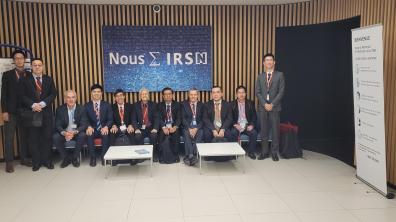
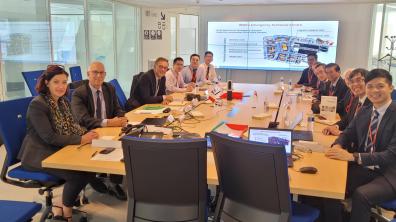
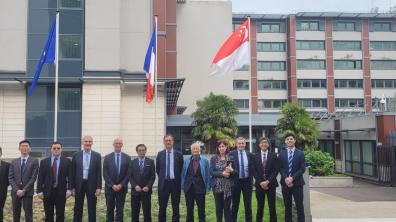
A delegation from the National University of Singapore (NUS)/Singapore Nuclear Research and Safety Initiative (SNRSI) visited IRSN's safety and radiation protection research facilities at Cadarache on September 19 and 20, 2022.
A delegation from the National University of Singapore (NUS)/Singapore Nuclear Research and Safety Initiative (SNRSI) led by Professor Pao Chuen LUI, Chairman of SNRSI and SNRSI Director Keng Yeow CHUNG and from the Energy Market Authority led by Director Darryl Kah Inn CHAN visited IRSN's safety and radiation protection research facilities at Cadarache on September 19 and 20, 2022.
The facilities visited were the following:
- AMANDE,
- MIRCOM,
- CABRI model,
- THEMA,
- CHROMIA,
- MAESTRO,
- ODE,
- GALAXIE.
The delegation continued this visit to IRSN Headquarters at Fontenay-aux-Roses on September 23, with a presentation of the research and expertise conducted on atmospheric dispersion models, followed by a presentation of crisis management and the technical Crisis Center.
A final debriefing meeting led by the Director General of IRSN Jean-Christophe NIEL concluded this visit.
Launch of the "PIANOFORTE" European partnership: research and education for radiation protection
Introduction
Launched on June 14, 2022 in Paris, the PIANOFORTE research partnership has the ambition to improve knowledge and promote innovation in the field of radiation protection for the benefit of better protection of the public, patients, workers and the environment in all scenarios of exposure to ionizing radiation.
Launched on June 14, 2022 in Paris, the PIANOFORTE research partnership has the ambition to improve knowledge and promote innovation in the field of radiation protection for the benefit of better protection of the public, patients, workers and the environment in all scenarios of exposure to ionizing radiation.
The European Partnership for Radiation Protection Research will contribute to improving the protection of the public, workers, patients and the environment from environmental, occupational and medical exposure to ionizing radiation. It brings together 58 partners representing 22 European Union countries as well as the United Kingdom and Norway, and is coordinated by the French Institute for Radiation Protection and Nuclear Safety (IRSN). It is co-financed by the European Union's EURATOM program and the Member States of the participating countries. Through the research activities that will be carried out within its framework, PIANOFORTE will contribute to the implementation of European policies such as the European plan to combat cancer, the green pact for growth, and the implementation of the roadmap for reducing industrial and natural risks.
Through the scientific challenges it will address, this partnership aims to contribute to priority European policies such as the fight against cancer (European Cancer Action Plan), the protection of health from environmental risks (Green Pact for Growth) and finally the improvement of anticipation and resilience in disaster situations (implementation of the Sendai Framework for Disaster Risk Reduction).
Within this partnership, at least three calls for proposals, open to the entire European research community for radiation protection, will be organized between 2023 and 2025. They will focus on the following four themes:
- improving patient radiation protection in relation to the use of ionizing radiation in the medical field
- a better comprehension of variability of individual response to exposure to ionizing radiation
- the study of mechanisms involved in chronic exposure to low doses of ionizing radiation
- the improvement of anticipation capacities and resilience in nuclear or radiological crisis situations and post-accident management.
Particular attention will be paid to the involvement of all stakeholders (authorities, civil society, radiation protection practitioners, experts, etc.) in the priority setting of the scientific topics that will be the subject of calls for tender and with respect to the question of translating this research into actual impact for strengthened radiation protection. The objective is to meet and integrate the expectations of the wide set of radiation protection stakeholders as best as possible. This partnership also specifically aims to build bridges with research activities carried out at European level in the "non-Euratom" fields, in particular in the health sector.
Beyond these research activities, PIANOFORTE will contribute to maintaining a sustainable capacity of expertise in radiation protection in Europe, which is internationally recognized, in particular by promoting the availability, use and sharing of existing state-of-the-art research infrastructures at the European level as well as by implementing education and training activities.
The partnership will build on previous work, and in particular on the results of the European joint program CONCERT conducted under the H2020 framework program which ended in 2020. It will also benefit from the achievements of other European projects just completed or in progress such as MEDIRAD, HARMONIC, RadoNorm or SINFONIA.
To date, PIANOFORTE involves 58 partners from 22 EU countries as well as the UK and Norway. It mobilizes public partners (public research organizations, authorities in the field of radiation protection, universities) but also the six European research platforms in radiation protection (MELODI, EURADOS, EURAMED, NERIS, ALLIANCE and SHARE). This initial consortium is expected to expand with the entities that will be selected in the framework of the open calls for tenders organized during the partnership.
The partnership will last 5 years and is expected to end in 2027. The estimated budget for PIANOFORTE is 46 million euros, 65% of which will be financed by the European Union and the rest by the partner countries. IRSN is the coordinator of the partnership.
Thème
Results of the H2020 Euratom call for projects: a success for IRSN
Introduction
Success for IRSN who participates in 8 European research projects selected by the European Commission in its call for projects of the Horizon 2020 programme for 2018-2019.
The European Commission (EC) has just published the results of its call for projects of the Horizon 2020 programme for 2018-2019. IRSN is participating in eight of the thirteen new European projects which will be launched during the year.
The recent success of IRSN's H2020 call for projects is part of the IRSN Contract of operational objectives and performance (COP) renewed with the French State until 2023. One of the challenges of this contract is to develop national, European and international partnership initiatives to deploy the scientific strategy and conduct high-quality research to meet the challenges of expertise. It confirms the IRSN position as a major player in research in the field of nuclear safety, radiation protection and environment. This result reflects IRSN dynamism in the proposals made and its contribution to collective actions for research at European level.
Jean-Christophe Niel, Director general of IRSN, points out that "40% of IRSN budget is dedicated to research to contribute to the improvement of knowledge on nuclear safety and radiation protection and develop the expertise of IRSN with the best scientific knowledge".
For the first time, IRSN was represented in all technical fields. Some of the key research themes selected include:
In the field of nuclear safety: two projects concerning Generation II and III reactors, R2CA (Reduction of Radiological Consequence in design based Assessment), on the radiological consequences of design accidents and their management strategy led by IRSN, and MUSA (Management and Uncertainties in Severe Accidents), on the improvement of severe accident simulation tools, in which IRSN will be in charge of coordinating the Work Package on the study of innovative mitigation means for accidents in storage pool.
In the field of safety of Generation IV reactors: the SAMOSAFER project (Severe Accident Modeling and Safety Assessment for Fluid Fuel Energy Reactors), led by the University of Delft, with IRSN participation.
In the field of safety of light water modular reactors, IRSN takes part in all technical work packages of the ELSMOR project (towards European Licensing of Small MOdular Reactors), led by the Technical Research Center of Finland (VTT).
It should be noted that the Institute will join the continuation of a project on nuclear data for modeling applications: SANDA follow-up (Supplying Accurate Nuclear Data for energy and non-energy Applications), piloted by CIEMAT (Centro de Investigaciones Energéticas Medioambientales y Tecnológicas, Spain). IRSN is also participating in the SHARE project (StakeHolder-based Analysis of REsearch for decommissioning) on the development of a roadmap for research on the decommissioning of facilities.
In the field of nuclear waste management: the EURAD project (EURopean joint programming on RAdioactive Waste Management and Disposal) on all the technical aspects of deep geological disposal of waste, led by ANDRA.
Finally, in the field of radiation protection, the HARMONIC project (Health effect of cArdiac fluoRoscopy and MOderN radiotherapy In pediatriCs), coordinated by ISGlobal Spain, focuses on the health effects of fluoroscopy (or radioscopy) and new approaches to pediatric cardiac radiotherapy.
More information: IRSN research programs
Thème